
From Foundation to Flow: Building the Conversation Studio MVP Through Complexity
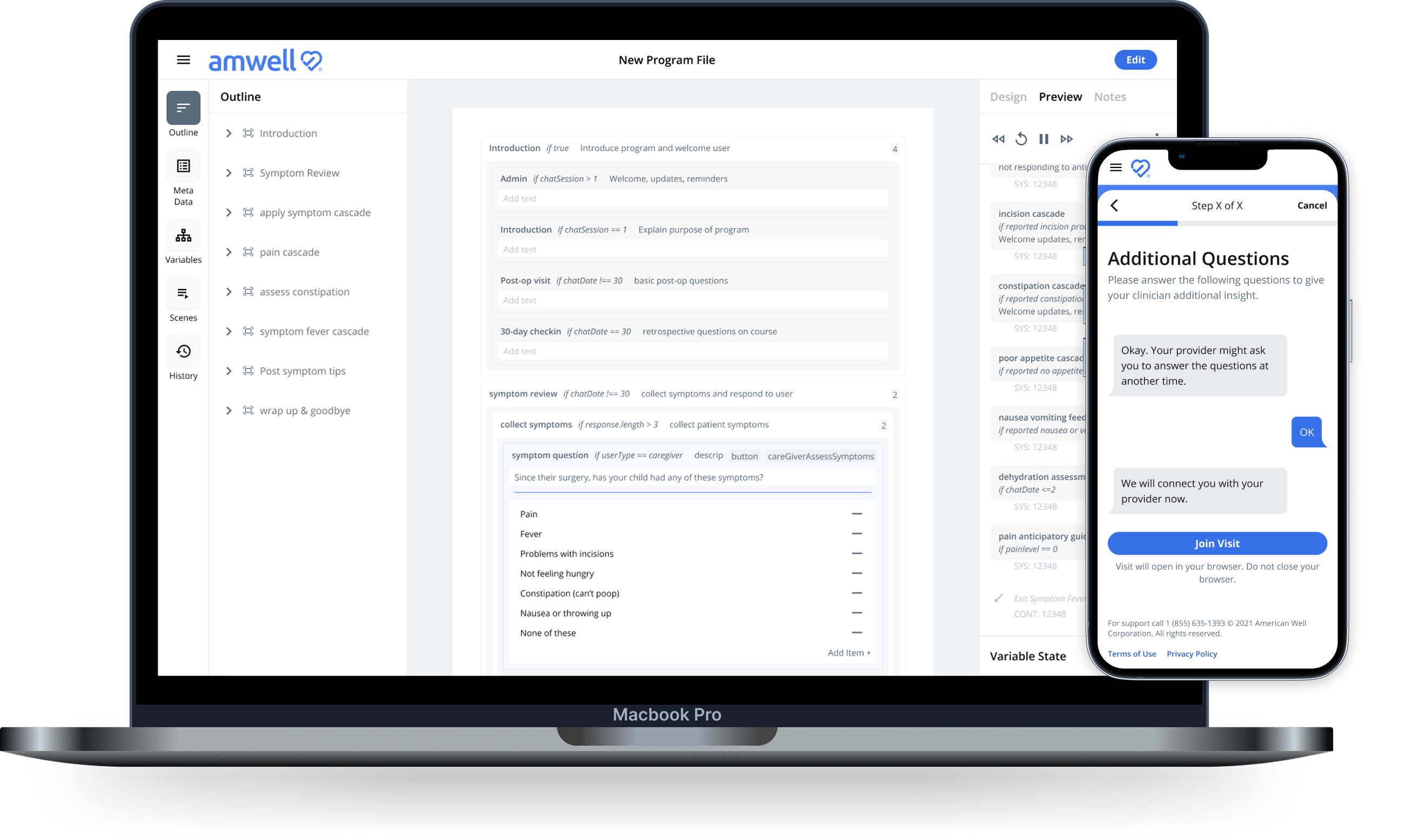
Turning a Node Map Into a Design Tool
The architecture for the Conversation Studio was powerful—but unusable. The engineering team had created a node-based system for representing conversation logic, but it wasn’t yet a tool. There was no UI for creating, editing, or validating programs—just raw JSON and abstract flows.
My challenge was to translate this backend model into a flexible, modular interface that could support clinical logic, patient messaging, and schedule orchestration—without overwhelming the people building the programs.
We had to design for non-technical users like informaticists and conversation designers, many of whom were managing complex patient journeys across pregnancy, chronic illness, or discharge planning. Their current workflow was scattered across spreadsheets, scripts, and docs.
To solve this, I worked closely with stakeholders to map the authoring lifecycle—from early stubbing and sketching ideas to detailed logic building and real-time previewing. I introduced drag-and-drop workflows, reusable components, and a validation layer to let users test their programs without needing an engineer. Our goal wasn’t just usability—it was confidence, speed, and safety at scale.
We shifted from misalignment to a shared product vision using hybrid logic to balance clinical nuance and technical scale.
Faster, Smarter Program Deployment
Our MVP experience transformed program development—streamlining workflows, enabling modular reuse, and giving clinicians tools to validate and launch programs independently. This reduced go-live time dramatically and opened the door to scalable care across multiple conditions.
Reduced care program creation from 8 months to 8 weeks
Enabled reuse across multiple tenants and patient conditions
Let’s Collaborate on Your Vision
Ready to elevate your project? Schedule a consultation to discuss innovative design solutions.